Source Digital 8kg Dynamic Cone Penetrometer for Soil Testing
Compare 30 listings for the digital 8kg dynamic cone penetrometer to find reliable soil testing equipment. Buyers can evaluate hammer weights, penetration ranges, and packing details from verified Chinese manufacturers; compare the available evidence and request quotations based on your requirements.
Key considerations
Products List






Comprehensive Sourcing Guide
Digital 8kg Dynamic Cone Penetrometer Sourcing Guide
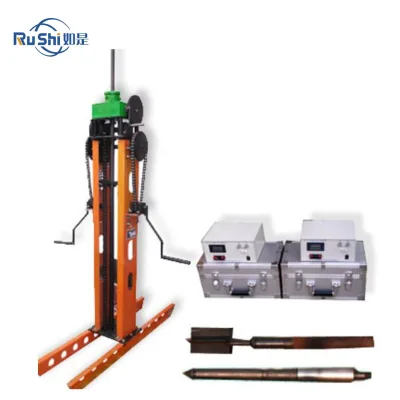
Procuring a digital 8kg dynamic cone penetrometer requires careful attention to the specific hammer weight and falling distance parameters that define the instrument's impact energy. The supplied data indicates that models exist with an 8kg hammer weight and a falling distance of 575mm, which are critical for achieving consistent penetration resistance measurements in soil testing. Buyers must verify that the digital readout system accurately captures these specific mechanical inputs to ensure data integrity during field operations.
The market listing signals reveal a diverse range of configurations, including variations in packing materials and origin locations such as Hebei and Chongqing in China. While some units are packaged in standard export wooden boxes or aluminum alloy cases, others utilize veneer cases with specific gross weights like 35kg. Sourcing decisions should prioritize suppliers who can clearly distinguish between the 8kg hammer variant and other weights like 9kg or 10kg to prevent specification mismatches during the procurement process.
Product Scope and Observed Listing Signals
The product scope for this category encompasses both manual and electronic variants, with specific models like the GD-2801I and TPC series offering different force capacities ranging from 100kN to 250kN. Buyers should note that while the core keyword focuses on an 8kg hammer, the broader market includes units with 10kg, 20kg, or even 30kN to 250kN capacities. It is essential to filter listings carefully to isolate the specific 8kg configuration, as the presence of multiple hammer weights in a single catalog can lead to confusion regarding the actual delivered equipment.
Listing signals also highlight significant variations in packaging and logistical details, such as packing sizes of 694168cm and gross weights varying between 20kg and 35kg depending on the model. Some suppliers offer aluminum alloy packaging, while others specify standard export wooden boxes or veneer cases. These differences impact shipping costs and handling requirements, so buyers must confirm the exact packaging type and total weight before finalizing orders to ensure compatibility with their logistics infrastructure.
Technical Specifications to Verify
Verification of the hammer weight is the primary technical requirement, as the supplied facts explicitly list an 8kg hammer weight alongside other options like 9kg and 10kg. Buyers must ensure the delivered unit matches the 8kg specification precisely, as even minor deviations can alter the impact energy and compromise the validity of soil penetration resistance data. The falling distance is another critical parameter, with observed listings indicating a specific distance of 575mm for certain models, which must be confirmed against the technical datasheet.
Time control and measurement range are additional technical specifications that require strict validation, with some units offering adjustable time controls from 0 to 99 seconds and penetration measurement ranges up to 600 penetrations. The standard cone weight of 102.5g is also a fixed attribute that must be present in the kit to ensure compliance with testing protocols. Buyers should request detailed technical drawings or calibration certificates to confirm that the digital display, hammer mechanism, and cone assembly all meet the exact numerical values observed in the high-confidence facts.
Compliance and Safety Documentation
Compliance documentation for dynamic cone penetrometers often references international standards such as ISO 22476-2 and DIN 4094-3, which govern the testing procedures and equipment specifications. While some listings mention ASTM D6951-03, buyers should verify that the specific 8kg model is certified or tested against the relevant standard for their target market, as not all listed products may satisfy every standard mentioned in the general catalog. The presence of a 1-year warranty or guarantee is a common feature that provides a baseline for quality assurance and after-sales support.
Safety documentation must include clear instructions for the operation of the dropping mechanism, which involves a 10kg or 20kg hammer in some configurations, though the 8kg variant requires specific handling protocols. Suppliers should provide evidence of engineering support, such as the availability of engineers to service machinery overseas, which is crucial for maintaining safety and operational continuity in remote field locations. Buyers should also confirm that the packaging, whether wooden or aluminum, meets export safety standards to prevent damage during transit.
Cost Drivers and Commercial Terms
Cost drivers for these instruments are heavily influenced by the complexity of the digital readout system and the specific materials used in the hammer and cone assembly. The observed price range spans from 1 to 20,000 USD, reflecting the vast difference between basic manual units and advanced electronic models with time control and digital data logging capabilities. Buyers must correlate the price with the specific technical features, such as the 250kN capacity of the TPC-25B model versus the 100kN capacity of the TPC-10B, to ensure they are paying for the correct performance level.
Commercial terms regarding supply ability and lead times are critical for project planning, with some suppliers indicating a supply ability of 100 sets per month. The minimum order quantity (MOQ) appears to be flexible, with observed ranges starting from 1 unit, allowing for small-scale procurement. However, buyers should clarify the port of dispatch, which is listed as Shanghai, Shenzhen, or Hongkong, as these locations can affect shipping costs and delivery schedules. Understanding these commercial variables helps in budgeting accurately and managing project timelines effectively.
Supplier Qualification and Quality Control
Supplier qualification should focus on the origin of the product, with high-confidence facts pointing to manufacturers in China Mainland, specifically Hebei and Chongqing. Buyers should verify the supplier's ability to provide customization services, as the data indicates that customization is available for these penetrometers. This flexibility allows for tailoring the equipment to specific project requirements, such as adjusting the hammer weight or modifying the packing details to suit local regulations or logistical constraints.
Quality control measures must include a review of the packing details and gross weight specifications to ensure the equipment arrives undamaged. The observed packing details, such as the GD-2801H Automatic Dynamic Cone Penetrometer packed in a veneer case with a total weight of 11kg, highlight the importance of robust packaging. Buyers should request quality assurance reports that confirm the hammer weight and falling distance match the ordered specifications, ensuring that the delivered product meets the rigorous demands of geotechnical testing.
Long-Term Procurement Checks
Long-term procurement checks should prioritize the availability of spare parts and the supplier's commitment to after-sales service, including the provision of engineers for overseas machinery servicing. The 1-year warranty or guarantee is a standard offering that buyers should leverage to ensure the longevity of the instrument. Regular calibration checks are essential to maintain the accuracy of the 8kg hammer and 575mm falling distance, which are critical for consistent data generation over the life of the equipment.
Buyers should also monitor the supply chain for any changes in the product model or standard, as the market includes various models like 16-T0012/A and TPC-3B with different specifications. Keeping a record of the specific model number and standard compliance, such as ISO 22476-2, ensures that future replacements or expansions of the fleet remain compatible. Establishing a direct line of communication with the supplier for technical support and updates will help mitigate risks associated with equipment failure or obsolescence in the field.
FAQs
What hammer weight options are available for the dynamic cone penetrometer?
Listed models include 8kg, 9kg, 10kg, and 20kg hammer configurations, so you can match the hammer to the test standard or soil conditions you work with. The 8kg version is commonly selected for lighter duty field testing, while the 10kg and 20kg setups suit deeper penetration profiles. Confirm the exact hammer weight with the supplier before ordering.
How deep can the dynamic cone penetrometer test in the field?
One listed configuration supports a testing depth of 12 meters, which covers most routine subgrade and pavement investigation work. Actual achievable depth depends on soil density, rod friction, and operator technique. For deeper or denser strata, expect slower advancement and consider whether a 20kg hammer configuration is more appropriate for your project.
Which standards does this dynamic cone penetrometer comply with?
Listed products reference several recognized standards, including ISO 22476-2, DIN 4094-3, ASTM D6951-03, and Australian standards AS 1289.6.3.2 and AS 1289.6.3.3. Because different models target different standards, always request written confirmation that the specific model you intend to purchase meets the standard your project specifications or client requires.
What are the drop height and falling distance specifications?
One listed configuration specifies a drop height of 50cm, while another model lists a falling distance of 575mm. These values control the impact energy delivered to the cone, so they must match your test standard. Verify the falling mechanism, height consistency, and any automatic release feature with the supplier against the standard you follow.
Can the dynamic cone penetrometer be customized for our requirements?
Yes, customization is listed as available for these products. Buyers commonly request changes to hammer weight, cone configuration, rod length, data recording options, or packaging. Discuss your testing standard and site conditions with the supplier early, request drawings or photos of the customized configuration, and confirm any impact on lead time before placing your order.
How is the digital dynamic cone penetrometer packed for export?
Listed packing options include a standard export wooden box, a wooden case, a standard export package with aluminium components, and aluminium alloy packing. One automatic model is packed in a veneer case weighing about 11kg gross. Export-grade packing protects the rods, hammer, and electronics during sea freight; confirm the packing type applies to your chosen model.
What is the typical weight and gross weight of the equipment set?
Gross weights listed for different configurations include approximately 20kg and 35kg, with the drop-weight itself at 10kg in one setup and an 11kg gross weight for a compact automatic model. The heavier weight generally reflects more rods or a complete kit. Check the packing size and gross weight for your selected model when planning freight costs.
Do suppliers provide warranty and after-sales support for this equipment?
A one-year warranty is listed for these products, and one listing notes that engineers are available to service machinery overseas. Warranty terms typically cover manufacturing defects but exclude wear parts such as cones and rods, so confirm which components are included. Also ask how spare parts, calibration guidance, and remote technical support are handled after purchase.